Section 1 — You Learned About Confucius in Qufu. Now Meet the People Who Disagreed With Him.
Take our Shandong journey from:
Qufu (曲阜, Qūfù)
toward modern:
Zibo (淄博, Zībó),
and specifically:
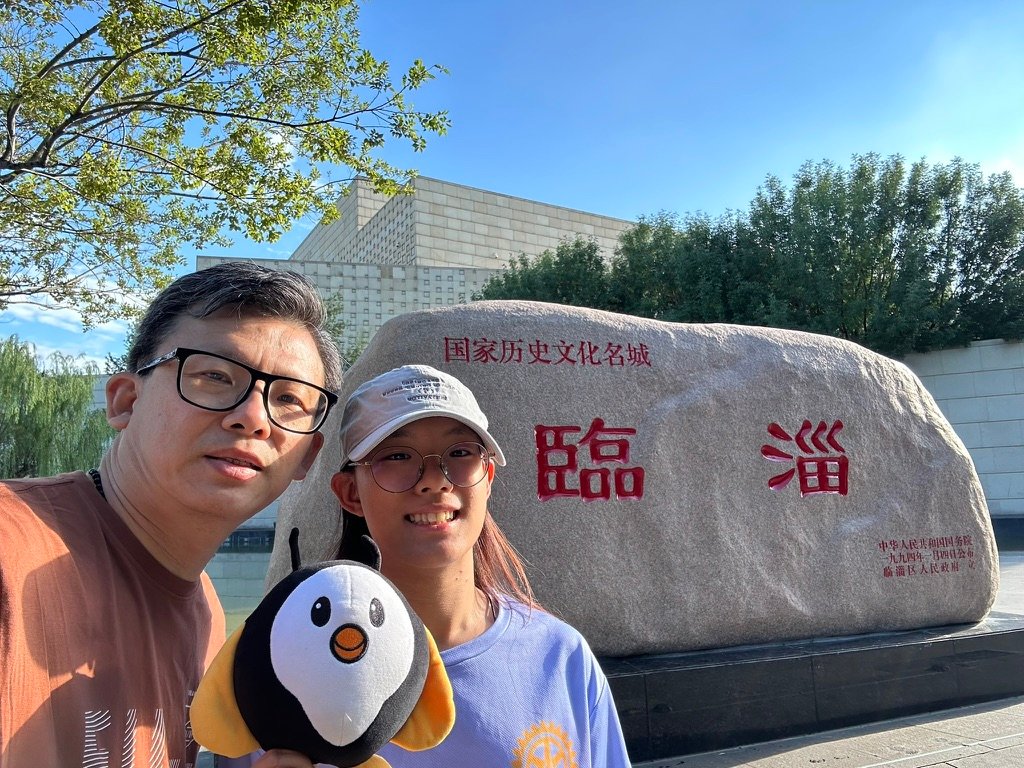
Linzi (临淄, Línzī).
Today:
临淄
is a district of Zibo.
But more than two thousand years ago, this was something much bigger:
the capital of Qi (齐国, Qí Guó).
🔥
And this is where Dad wants the first-time China traveler to temporarily forget something.
Forget:
China = one country.
Forget:
Emperor = one ruler of China.
Forget even:
Confucius = Chinese philosophy.
😂
Because we’re going back to a time before:
Qin Shi Huang (秦始皇)
unified the rival states in:
221 BCE.
And the political map looked very different.
First: Learn One Extremely Important Character
国 — guó
state / country / polity
You’ve seen it in:
中国 — Zhōngguó
China
But now look at:
齐国 — Qí Guó
State of Qi
and:
鲁国 — Lǔ Guó
State of Lu
🔥
Confucius came from:
鲁国 — Lu.
Now Dad & Elaine have traveled into the historical world of:
齐国 — Qi.
Different:
国.
Different rulers.
Different political interests.
Different ideas.
😳
That’s the first sting.
🗺️ Wait — China Had Different STATES?
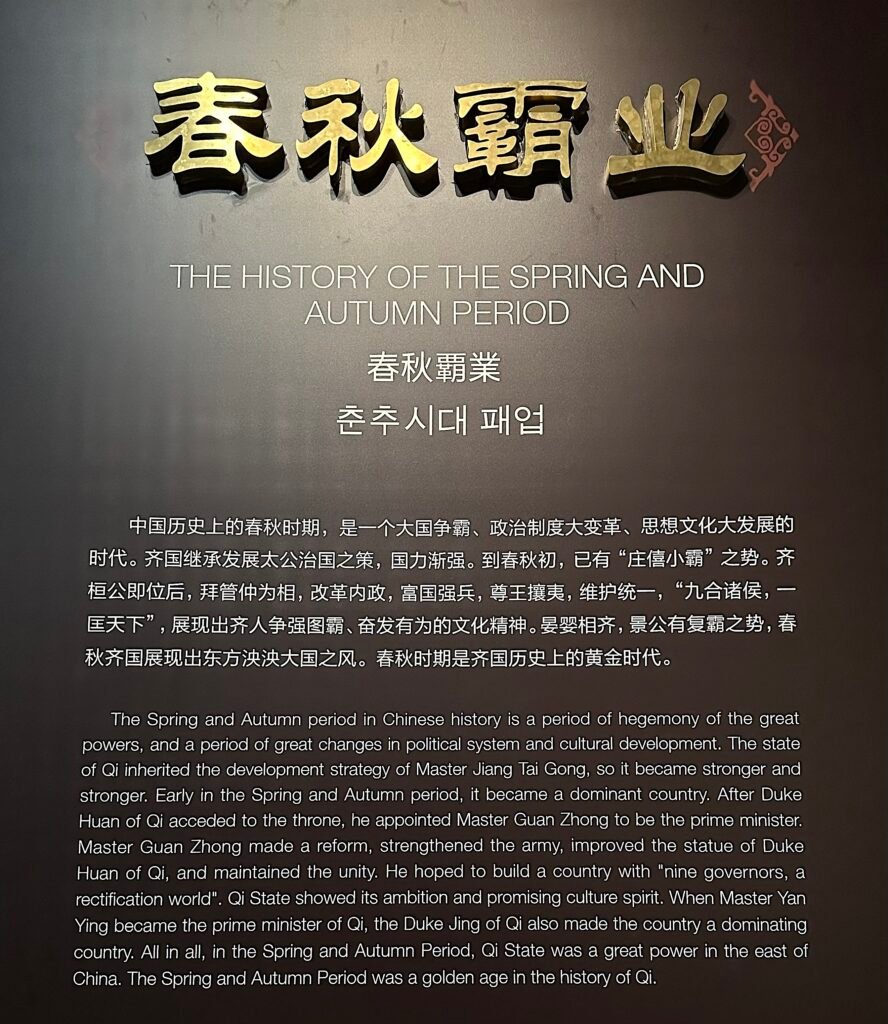
Before the Warring States came the Spring and Autumn period (春秋时期, Chūnqiū Shíqī). Dad photographed this display at the Qi Culture Museum (齐文化博物馆) in Linzi. It explains how Qi (齐国, Qí Guó) grew into one of the major powers of eastern China, especially under Duke Huan of Qi (齐桓公, Qí Huángōng) and his famous minister Guan Zhong (管仲, Guǎn Zhòng). For Chinese-history beginners, remember the sequence: Western Zhou 西周 → Spring and Autumn 春秋 → Warring States 战国 → Qin unification 秦统一. Linzi lets you stand in a capital that lived through this long transformation. Photo by Dad.
Yes.
😂
During the:
Spring and Autumn period (春秋时期, Chūnqiū Shíqī)
and especially the:
Warring States period (战国时期, Zhànguó Shíqī),
the Zhou political world contained multiple competing states.
By the later Warring States period, you’ll often encounter the famous:
战国七雄 — Zhànguó Qīxióng
Seven Warring States powers / Seven Heroes
They were:
齐 — Qí
Qi
楚 — Chǔ
Chu
燕 — Yān
Yan
韩 — Hán
Han
赵 — Zhào
Zhao
魏 — Wèi
Wei
and:
秦 — Qín
Qin.
🔥
Seven major powers.
Not:
one emperor.
Not:
one capital.
Not:
one government.
Now:
“Qin unified China”
starts sounding much more interesting.
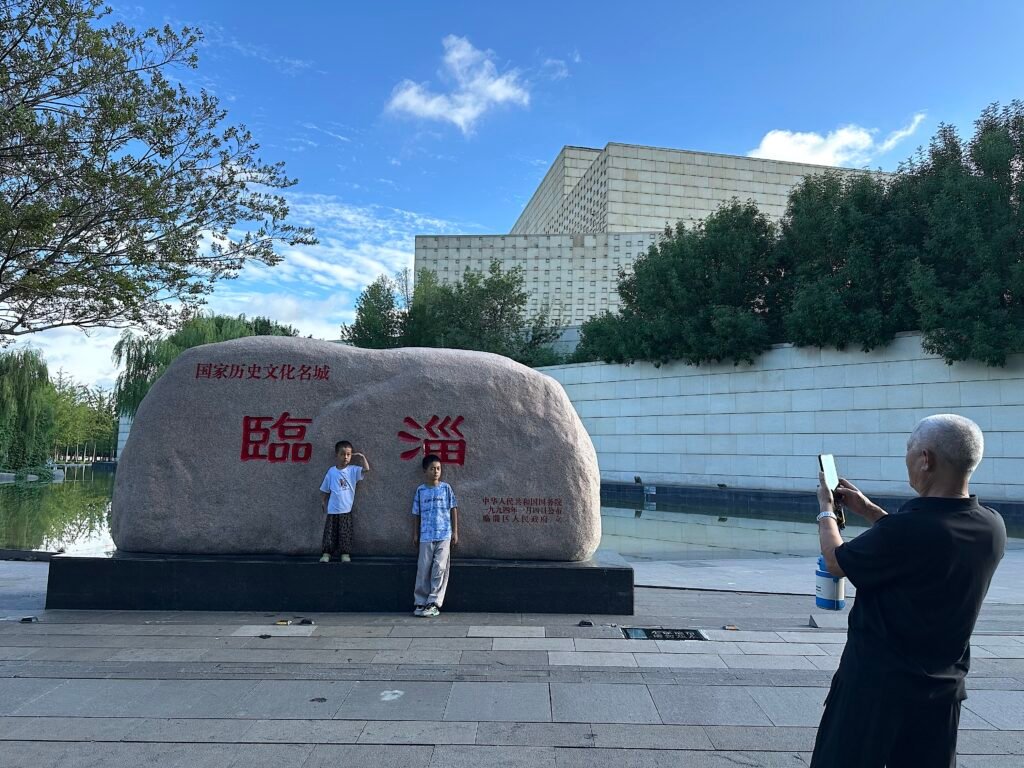
🐇 And Linzi 临淄 Wasn’t Some Tiny Provincial Town
The ancient:
Linzi (临淄)
was one of the great urban centers of its age.
Qi was a major eastern state, and Linzi developed as an important:
political center,
economic center
and:
cultural center.
The modern:
Qi Culture Museum (齐文化博物馆, Qí Wénhuà Bówùguǎn)
uses the rise and transformation of the ancient Qi capital as the backbone of its exhibitions, covering Qi from its early history through the Spring and Autumn and Warring States periods.
So when Dad & Elaine came here, we weren’t visiting:
“an obscure historical suburb of Zibo.”
😂
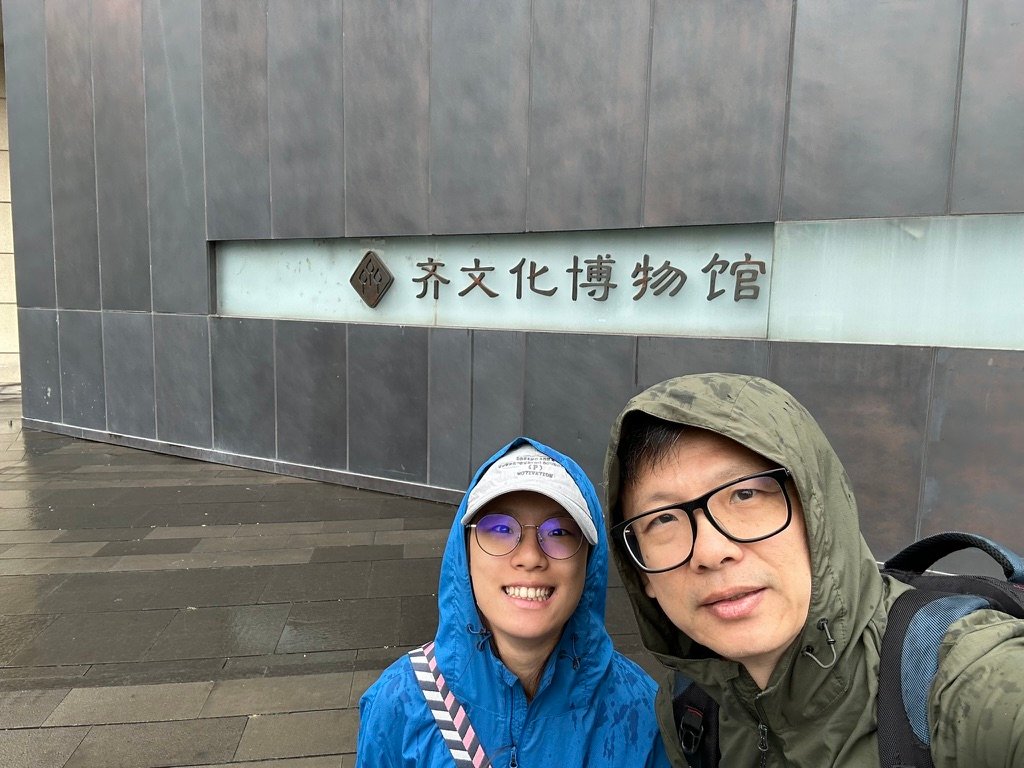
We were standing in the landscape of:
one of Qin’s great rivals!!
Another Useful Word: 都
都 — dū
capital / metropolis in this context
So:
齐都 — Qídū
capital of Qi
and:
故都 — gùdū
former / ancient capital.
🔥
You’ll encounter Linzi described as:
齐国故都
ancient capital of the State of Qi.
That’s useful Mandarin AND useful history.
Because now the map starts filling up with:
CAPITALS.

🍚 Western Handrail: Don’t Imagine “China” as France With Seven Provinces Fighting
This distinction matters.
😂
Don’t imagine:
“China already existed exactly as one unified nation-state, but seven provincial governors had an argument.”
That’s too modern.
The Warring States were:
genuine competing political states
with their own:
rulers,
armies,
territories,
administrations
and:
strategies.
🔥
Yet they also operated within overlapping cultural and political traditions inherited from the broader:
Zhou (周)
world.
So:
DIFFERENT STATES
doesn’t mean:
NO SHARED CULTURE.
And:
SHARED CULTURE
doesn’t mean:
ONE STATE.
😳
That distinction is enormously important for understanding pre-Qin China.
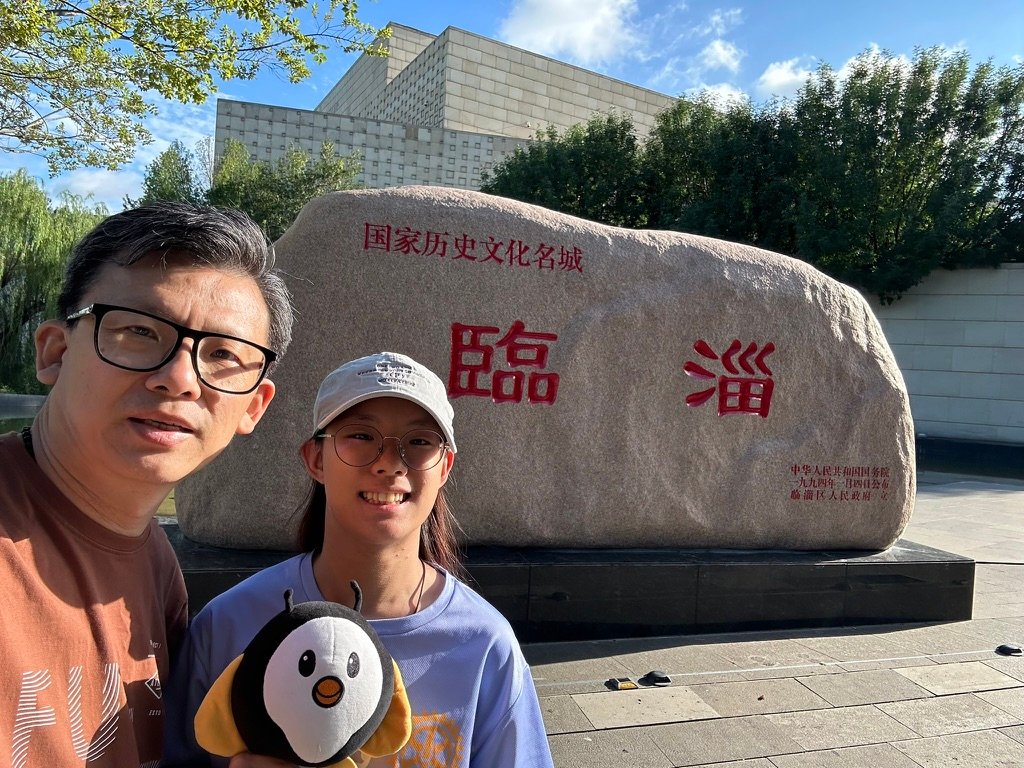
🐇 Qufu 曲阜 and Linzi 临淄 Were Neighbors — But Not the Same Political World
This is why our Shandong journey is so good.
At:
Qufu
we encountered:
Lu (鲁国)
and:
Confucius (孔子).
Then travel toward:
Linzi
and we enter:
Qi (齐国).
🔥
Two neighboring states.
Two political environments.
And many competing ideas about:
how society should be ordered
and:
how rulers should govern.
Now our Qufu fried rice becomes tastier AFTER Linzi.
😂
Confucius was not:
“the only ancient Chinese thinker telling China what to do.”
Far from it.
🧠 Welcome to the Hundred Schools of Thought
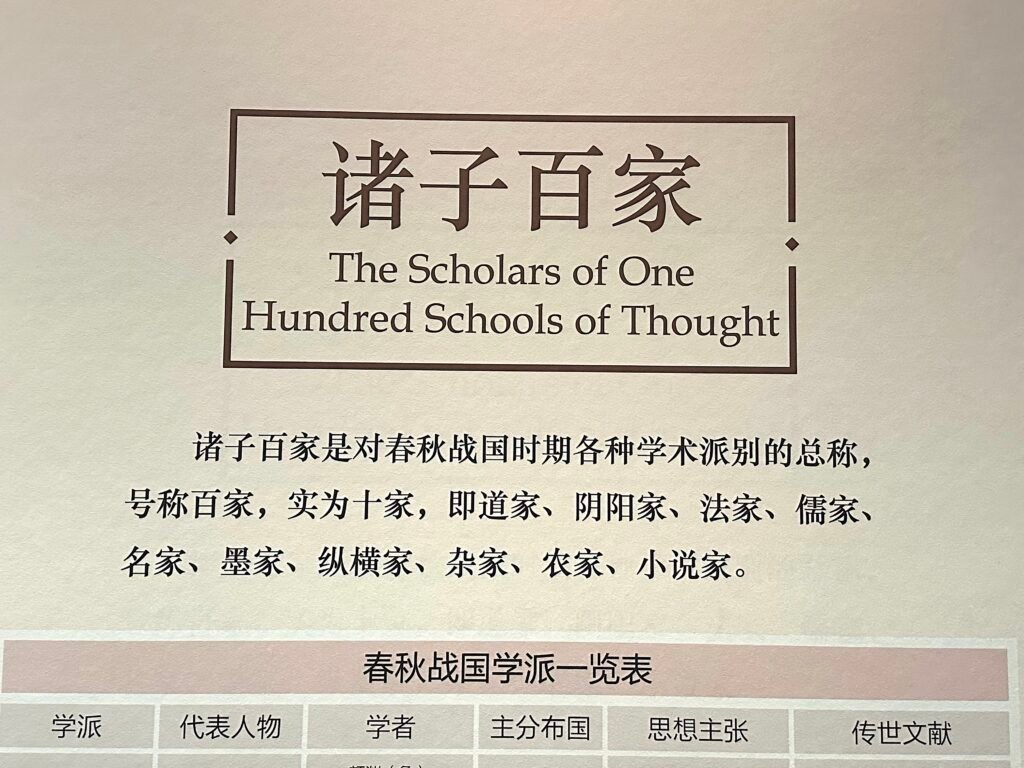
“Hundred Schools” doesn’t literally mean exactly 100 schools. Dad photographed this explanation of 诸子百家 (zhūzǐ bǎijiā, “the various masters and Hundred Schools”) in Linzi. The display explains that the phrase is a collective label for the many intellectual traditions of the Spring and Autumn and Warring States periods (春秋战国时期), including 儒家 (Rújiā, Confucianism), 道家 (Dàojiā, Daoism), 法家 (Fǎjiā, Legalism) and 墨家 (Mòjiā, Mohism). For beginners, the important idea isn’t memorizing every school—it is realizing that ancient China contained many competing thinkers proposing different answers to how people should live and how states should be governed. Photo by Dad.
One of the most famous expressions from this period is:
百家争鸣 — bǎijiā zhēngmíng
Very roughly:
“the Hundred Schools contending/debating.”
Beginner Chinese:
百 — bǎi
hundred
家 — jiā
school / intellectual tradition here
争 — zhēng
contend / compete
鸣 — míng
sound / make one’s voice heard
🔥
Don’t take:
百 — hundred
as an audited spreadsheet proving exactly:
100 schools.
😂
The expression evokes an age of:
intense intellectual diversity and debate.
And Linzi gives us one of the greatest physical doorways into that world.
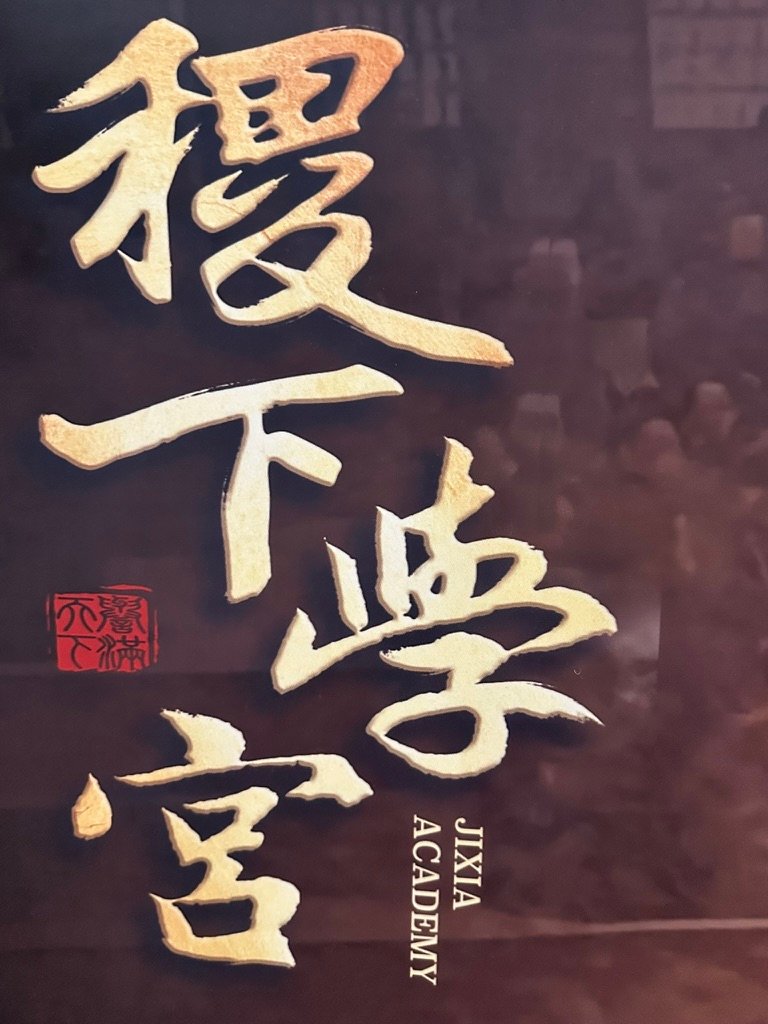
Welcome to 稷下 (Jìxià). 🐇 Dad photographed this display in Qi Culture Museum (齐文化博物馆, in Linzi , ancient capital of Qi. Jixia Academy opens the door to one of our favorite Warring States rabbit holes: competing states weren’t only fighting with armies—they were competing for thinkers, talent and better ideas about government. Photo by Dad.
🏫 Meet Jixia Academy
稷下学宫 — Jìxià Xuégōng
Jixia Academy
This is one of the most fascinating places in our entire Shandong journey.
Beginner Chinese:
学 — xué
learning / study
宫 — gōng
palace / institutional complex, depending on context
So:
学宫 — xuégōng
can refer to an institutional place of learning.
🔥
Jixia operated in the Qi capital during the:
Warring States period.
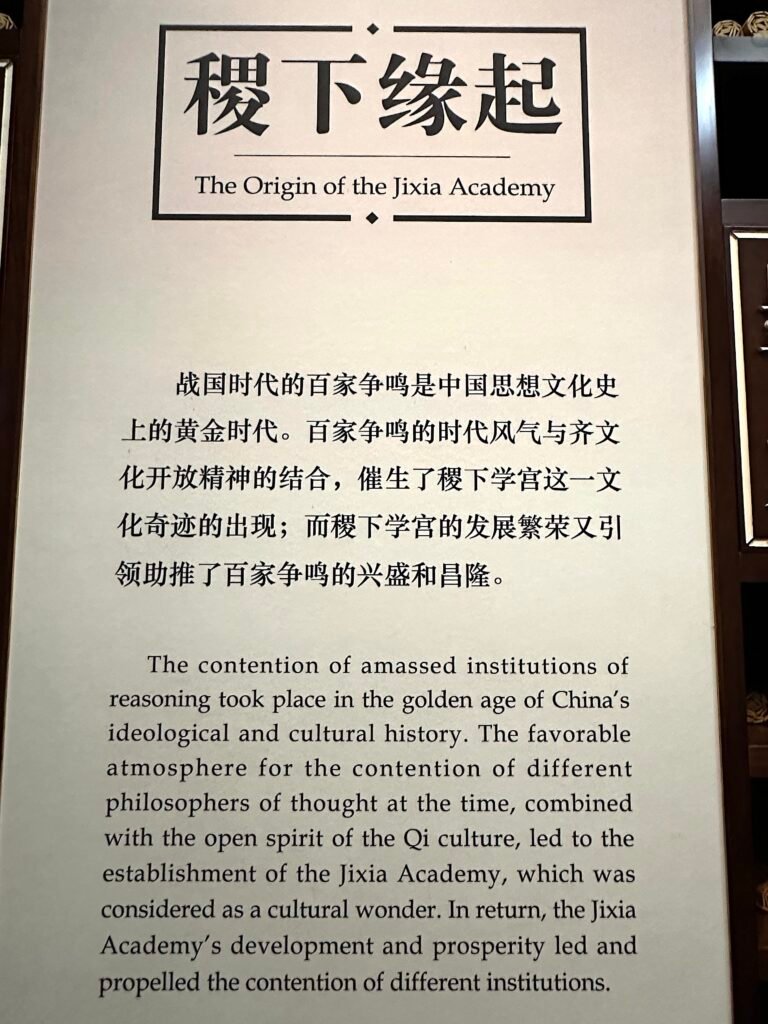
Why did Jixia Academy emerge in Qi? Dad photographed this explanation of 稷下缘起 (Jìxià yuánqǐ, “The Origins of Jixia”) in Linzi. The display links the rise of Jixia Academy (稷下学宫, Jìxià Xuégōng) with the extraordinary intellectual competition of the Warring States era and what it describes as the relatively open spirit of Qi culture (齐文化, Qí Wénhuà). The relationship then reinforced itself: competing thinkers helped make Jixia flourish, while Jixia provided an environment in which different schools could meet and debate. For beginners, think of it as political competition creating a marketplace for ideas — one reason 百家争鸣 (bǎijiā zhēngmíng, the Hundred Schools contending)became such an important chapter in Chinese intellectual history. Photo by Dad.
It brought together thinkers associated with different intellectual traditions and functioned as a remarkable center of:
learning,
debate,
research
and:
political advice.
Recent archaeological work has identified a roughly 40,000-square-meter building complex outside the western gate of the ancient Qi capital as the Jixia Academy site after several years of excavation and research.
🍚 Western Handrail: Ancient Think Tank + University?
You’ll often see Jixia described as:
China’s earliest university.
Or:
an ancient think tank.
Useful handrails.
But don’t force either modern institution backward too literally.
😂
Jixia wasn’t:
Harvard BC.
And it wasn’t:
RAND Corporation with bamboo slips.
😭😂
But the comparison helps Western beginners grasp something extraordinary:
the Qi rulers supported a place where prominent thinkers could gather, teach, debate and advise.
That is remarkable.
🐇 And Who Was Debating?
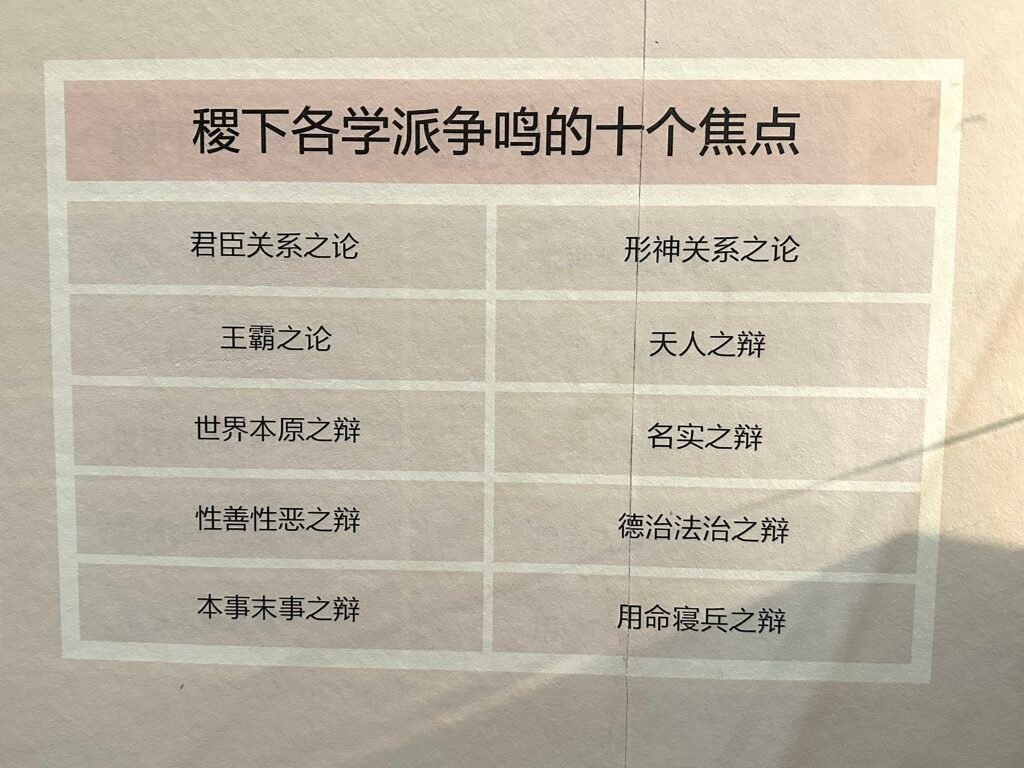
What were the Hundred Schools actually arguing about? Dad photographed this display on the “Ten Focuses of Debate among the Schools at Jixia” (稷下各学派争鸣的十个焦点). The questions ranged from 君臣关系 (jūnchén guānxì, ruler–minister relations) and 王霸之论 (wáng-bà zhī lùn, rule by moral kingship versus hegemonic power)to whether human nature is good or evil, whether government should rely on 德治 (dézhì, rule by virtue) or 法治 (fǎzhì, rule by law), and even debates about names and reality. For beginners, this is the key to 百家争鸣: ancient Chinese thinkers were proposing competing answers to very practical questions about how people, society and states should work. Photo by Dad at Qi Cultural Museum.
Now our Qufu traveler gets a shock.
At Jixia and within the broader Warring States intellectual world, we encounter traditions associated with:
儒家 — Rújiā
Confucian tradition
道家 — Dàojiā
Daoist tradition
法家 — Fǎjiā
Legalist tradition
墨家 — Mòjiā
Mohist tradition
and other schools and thinkers.
🔥
Different answers to questions like:
What makes a good ruler?
What makes an orderly society?
Should government rely on virtue?
Ritual?
Law?
Rewards and punishments?
What is human nature like?
😳
Ancient China was arguing with itself.
Loudly.
🌶️ Confucius Did NOT Win the Argument in His Lifetime!
This is worth remembering.
😂
Today:
Confucius
is globally famous.
So beginners naturally imagine:
Confucius appears → China accepts Confucianism → 2,000 years happen.
No.
🔥
Confucius lived amid intense political competition.
His followers and later Confucian thinkers continued developing and arguing for their ideas.
Other schools offered:
very different answers.
And different rulers experimented with:
different policies.
The eventual prominence of Confucian traditions in imperial China was:
a historical development
not:
an automatic result of Confucius speaking.
👑 Why Would a Ruler WANT Competing Thinkers?
Now Dad’s Political Science rabbit appears.
😂
Imagine you’re the ruler of:
Qi.
You’re competing with:
six other major powers
and numerous political actors.
You need:
better administration,
economic strength,
military strategy,
diplomacy,
political ideas
and:
talent (人才, réncái).
Beginner Chinese:
人 — rén
person
才 — cái
ability / talent
So:
人才
talented people / talent.
🔥
Attracting thinkers isn’t merely:
“supporting philosophy because philosophy is nice.”
It can be:
STATE COMPETITION.
🐇 Ideas Were Competing Because STATES Were Competing
This is the key connection.
WARRING STATES
weren’t only competing through:
armies.
They were also competing through:
administration,
economic reform,
diplomacy,
technology,
military organization
and:
ideas about government.
🔥
So the famous:
百家争鸣 — Hundred Schools debate
wasn’t floating above politics.
It existed inside a world of:
intense political competition.
That’s what Linzi helps us see.
🌶️ And Qi Had Its Own Political Personality
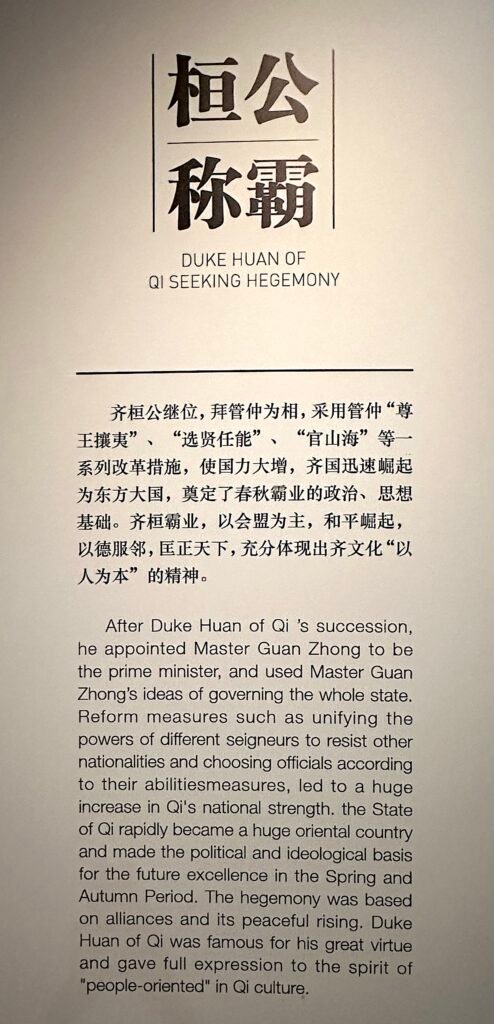
How did Qi become a major power? Dad photographed this display on 齐桓公称霸 (Qí Huángōng chēngbà) — Duke Huan of Qi’s rise to hegemony. During the Spring and Autumn period (春秋时期, Chūnqiū Shíqī), Duke Huan worked with his famous minister Guan Zhong (管仲, Guǎn Zhòng) to strengthen Qi through political and administrative reforms, talent recruitment and alliances. For beginners, notice the word 霸 (bà): here it refers to hegemony—leadership and dominance among competing states, not yet the unification of China under one emperor. Qi became powerful, but China was still a world of multiple states. Photo by Dad.
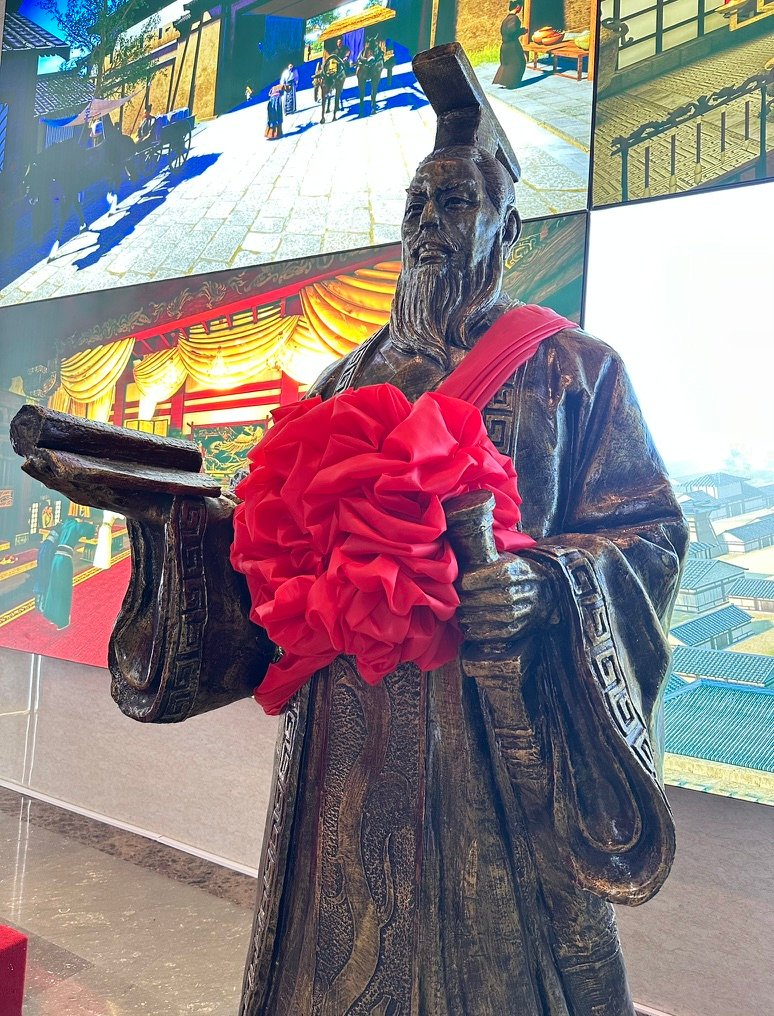
Meet Duke Huan of Qi (齐桓公, Qí Huángōng) — one of the great power players of the Spring and Autumn period. Working with his celebrated minister Guan Zhong (管仲, Guǎn Zhòng), Duke Huan strengthened Qi (齐国)through reforms, talent recruitment, military power and diplomacy, helping turn it into the leading eastern state of his age. He became famous as one of the early 霸主 (bàzhǔ, hegemonic lords) — powerful rulers who competed for leadership in a China that was still divided among many states. Long before Qin Shi Huang unified the realm, Qi was already showing us what interstate competition looked like. Dad photographed this statue at the Qi Culture Museum in Linzi.
Qi became famous for:
commerce,
wealth,
political experimentation
and:
intellectual openness.
Modern presentations of Qi culture often emphasize ideas such as:
务实 — wùshí
pragmatism / practical orientation
开放 — kāifàng
openness
and:
包容 — bāoróng
inclusiveness / tolerance.
🔥
We should be careful not to turn modern cultural branding into a perfectly unchanged description of ancient Qi.
But the historical picture of Qi as a wealthy, powerful state that patronized diverse thinkers is well grounded.
And Jixia is our strongest doorway into that story.
🐇 Then One State Eventually Ends the Debate Politically
Look again at our Seven Powers:
齐 楚 燕 韩 赵 魏 秦
Which one eventually conquers the others?
😬
秦 — Qin.
In:
221 BCE
the ruler of Qin completes the conquest of the rival states.
Then:
Qin Shi Huang (秦始皇)
becomes:
First Emperor (始皇帝, Shǐ Huángdì).
🔥
Now our Linzi visit has arrived at the front door of one of our Michelin Big Questions:
What Did Qin Shi Huang Actually “Unify”?
🍚 Suddenly “Unification” Means Something Different
Before Linzi, a first-time traveler might hear:
“Qin Shi Huang unified China.”
and imagine:
China was broken; Qin put it back together.
😂
After Linzi:
you’ve met:
齐国 — Qi
with its own:
capital,
ruler,
army,
political culture
and:
intellectual institutions.
Now Qin’s achievement looks more like:
one competing state conquering other powerful states and creating a new imperial political order.
🔥
That’s much more interesting.
🐇 And What Happened to Qi?
Qi was the:
last of the six rival states
to be conquered by Qin in:
221 BCE.
😳
Think about that while standing in:
Linzi.
This had been:
a capital.
A center of wealth.
A center of political power.
A center of intellectual life.
Then:
its independent state disappeared.
🔥
The city remained.
The culture left traces.
But the political map changed completely.
🪙 Don’t Just Look for Kings — Look for Money
Another wonderful Qi rabbit hole is:
currency.
Qi was associated with distinctive:
knife money (刀币, dāobì).
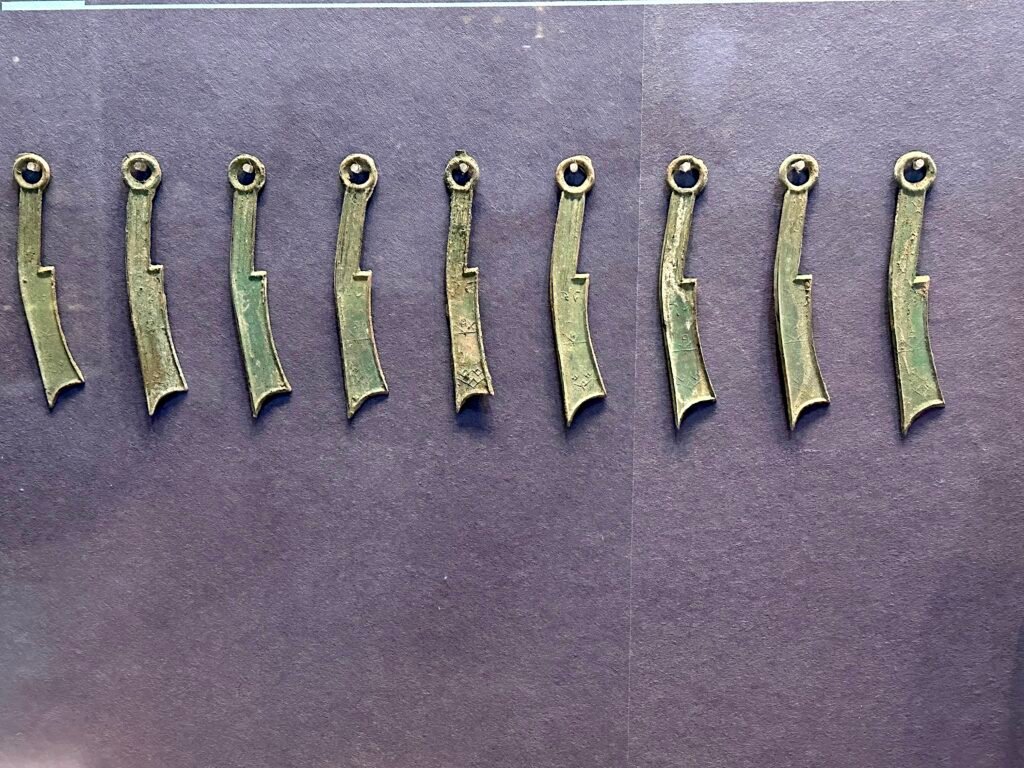
Money shaped like a knife. 😳 Dad photographed these examples of 刀币 (dāobì, “knife money”) at the Qi Culture Museum (齐文化博物馆, Qí Wénhuà Bówùguǎn) in Linzi. Used as currency in parts of ancient China, knife-shaped bronze money is a vivid reminder that the competing states did not share every institution in exactly the same form. In Qi, even 钱 (qián, money) helps us see the larger Warring States story: different states, different systems—before Qin unification. Photo by Dad.
Beginner Chinese:
刀 — dāo
knife
币 — bì
currency / money
So:
刀币
knife-shaped money.
🔥
Different states in pre-imperial China used different forms of currency.
Now remember Qin’s later standardization.
Suddenly:
currency
becomes evidence of:
political fragmentation
before unification.
A tiny object can explain a giant historical change.
⚽ And Yes — Zibo Has a Football Rabbit
😂
Because history refuses to behave.
Linzi is also strongly associated with:
蹴鞠 — cùjū
an ancient Chinese ball game.
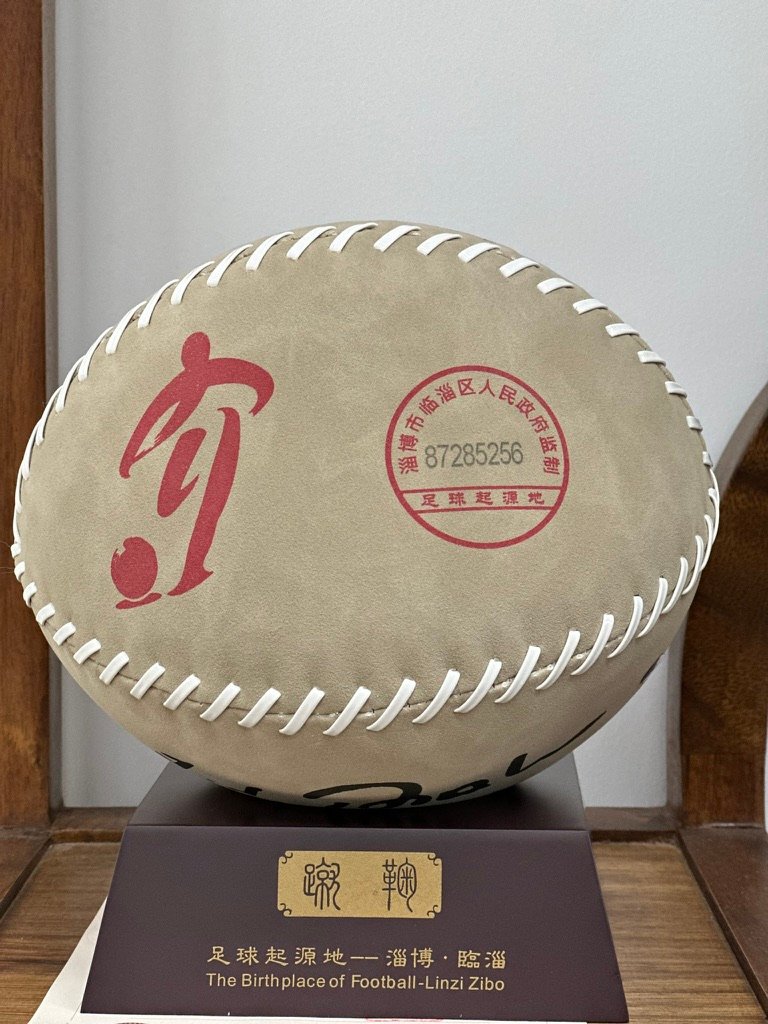
Beginner Chinese:
蹴 — cù
kick
鞠 — jū
ball in this historical term
So:
蹴鞠
cuju.
Modern Zibo promotes Linzi as a birthplace of ancient cuju, and FIFA has previously recognized cuju as an early form of football.
Fun?
Absolutely.
But Dad isn’t letting football hijack the article.
😂
Our main rabbit is still:
QI → COMPETING STATES → COMPETING IDEAS → QIN.
🐞 That’s the First Sting
You came to:
Zibo / Linzi
perhaps thinking:
“Ancient Qi culture.”
Fine.
Then:
齐国 — State of Qi
↓
临淄 — Linzi
↓
capital
↓
Warring States (战国)
↓
Seven Powers (战国七雄)
↓
Jixia Academy (稷下学宫)
↓
Hundred Schools (百家争鸣)
↓
Confucianism (儒家)
Daoism (道家)
Legalism (法家)
Mohism (墨家)
↓
political competition
↓
Qin (秦)
↓
221 BCE.
😬
And suddenly the real question isn’t:
“What was the State of Qi?”
It’s:
“What did ‘China’ look like when there was no single China ruling all these states?”
🔥🔥🔥
That’s our Michelin doorway.
“What happens when ONE of these competing states finally conquers all the others?”
🔥
That takes us straight to:
Qin (秦).
But don’t answer the whole question here.
That’s what our Michelin courses are for.
Because after walking through Linzi, the familiar sentence:
“Qin Shi Huang unified China in 221 BCE.”
doesn’t sound so simple anymore.
You now know what existed before Qin:
powerful states,
different capitals,
different rulers,
different institutions,
different currencies,
competing armies
and:
competing ideas about how society should be governed.
😳
So when Qin finally conquered:
Qi (齐)
in:
221 BCE,
it wasn’t merely coloring the last empty province on a map.
It was ending:
an independent political state
and replacing the Warring States political order with:
a new imperial system!!
🔥🔥🔥
And THAT is where Linzi hands you directly to the Michelin kitchen:
What Did Qin Shi Huang Actually “Unify”?
🐇
🐞 Section 2 Sting
You arrived in Linzi 临淄 asking:
“What was ancient Qi?”
Then:
齐国
↓
临淄
↓
稷下学宫
↓
百家争鸣
↓
儒家
↓
墨家
↓
道家
↓
法家
↓
人才
↓
变法
↓
state competition
↓
Qin
↓
221 BCE.
😬
And now the question is no longer:
“Who won the Warring States?”
We already know that.
Qin won.
The much better question is:
“What did Qin do with all these different political worlds AFTER it won?”
🔥
That’s the Sting.
And that’s exactly where we stop frying.
Section 3 — How to Visit Zibo 淄博 & Linzi 临淄 — and Stand Inside the World Qin Conquered
By now Dad has ruined another innocent sightseeing trip.
😂
You came to:
Zibo (淄博, Zībó)
and:
Linzi (临淄, Línzī)
to explore:
Qi culture (齐文化, Qí Wénhuà).
Now you’re carrying around:
State of Qi (齐国),
Warring States (战国),
Seven Powers (战国七雄),
Jixia Academy (稷下学宫),
Hundred Schools (百家争鸣),
Confucians (儒家),
Mohists (墨家),
Daoists (道家),
Legalist thinkers (法家),
and:
Qin Shi Huang (秦始皇).
😬
Excellent.
🐞
Now let’s return to the traveler:
How do you actually visit Linzi 临淄 ?
📍 First: Zibo 淄博 and Linzi 临淄 Are Not the Same Thing
Modern:
Zibo (淄博)
is a prefecture-level city in:
Shandong (山东, Shāndōng).
Linzi (临淄)
is one of its districts.
But historically:
Linzi was the important name.
This was the capital of:
Qi (齐国).
🔥
So if you’re coming for ancient Chinese history, don’t merely search:
Things to do in Zibo.
Search specifically for:
临淄 — Linzi
and:
齐文化 — Qi Culture.
That’s where our rabbit lives.
🐇
🍢 Palate Cleanser: Yes, This Is THAT Zibo 淄博
After all that:
齐国 · 稷下 · 百家争鸣 · Qin…
Dad should probably mention something.
😂
Modern:
Zibo (淄博, Zībó)
is also famous in China for:
淄博烧烤 — Zībó shāokǎo
Zibo barbecue
Zibo’s distinctive barbecue culture became a major Chinese travel phenomenon, with visitors coming for grilled skewers served with small flatbreads, dipping sauce and spring onions.
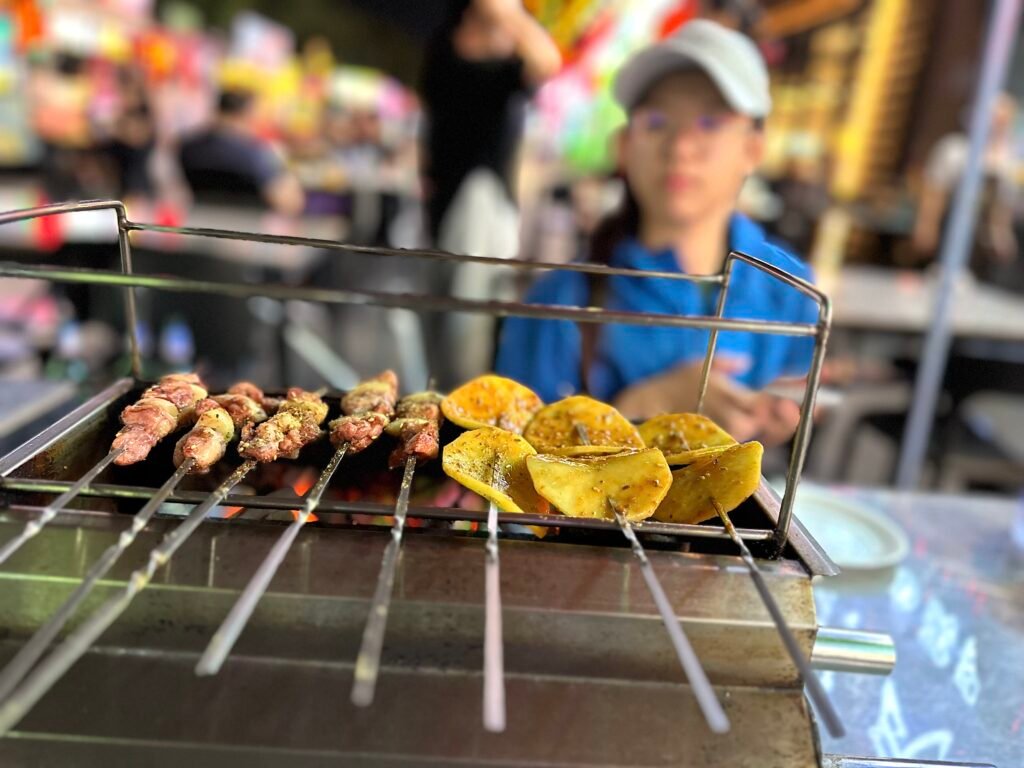
So yes:
COME FOR ANCIENT QI.
And after spending several hours falling down Warring States rabbit holes…
EAT THE BBQ.
😂🔥
Think of it as the Deep China palate cleanser:
白天 — báitiān
daytime:
齐国 · 稷下 · 百家争鸣
晚上 — wǎnshang
evening:
烧烤!
Chinese history can resume tomorrow.
🐞🍢🔥
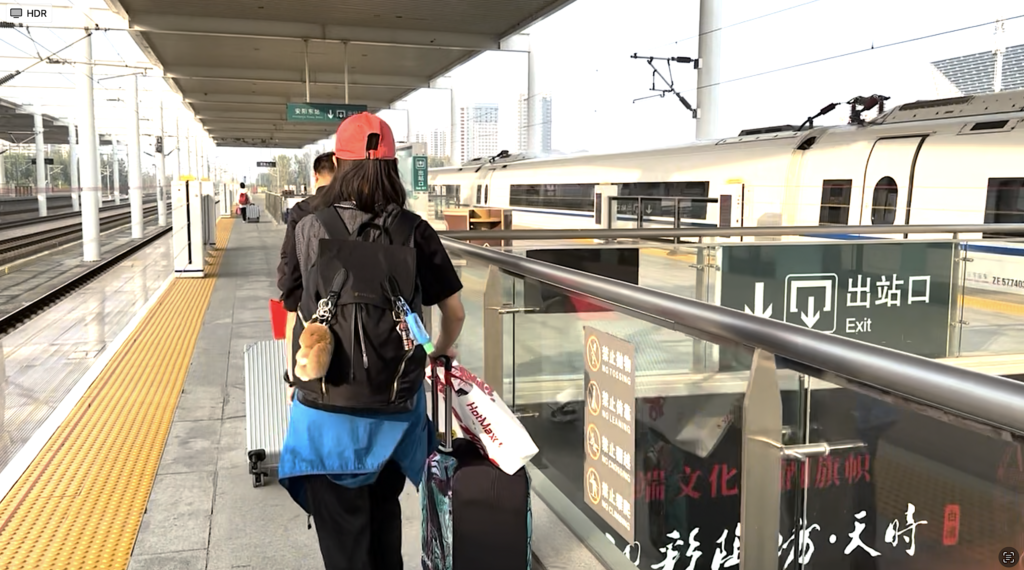
🚄 Getting There by High-Speed Rail
Zibo is connected to China’s:
high-speed rail (高铁, gāotiě)
network.
From:
Jinan (济南, Jǐnán),
the rail journey to Zibo can be quite short.
There are also high-speed rail connections from:
Beijing (北京)
depending on the service.
But remember:
arriving at Zibo railway station ≠ arriving at ancient Linzi.
😂
You’ll still need onward road transport to the historical sites in Linzi.
So when planning the day, calculate:
door-to-door time
rather than merely:
train time.
🚗 Dad’s Preference: Use a Car for Linzi
Once you’re exploring Linzi, the sites aren’t all sitting conveniently around one pedestrian square.
For international travelers interested in history, Dad would consider:
private car (包车, bāochē)
or:
car + English-speaking guide (英语导游, Yīngyǔ dǎoyóu).
🔥
Especially if you’re combining several Qi-related sites.
This is one of those places where:
transport + interpretation
together can make the day much easier.
🧑🏫 And YES — Dad Recommends a History Guide Here
Could you visit independently?
Yes.
But Linzi is not:
Terracotta Warriors.
There isn’t one gigantic visual object that immediately tells a Western visitor:
THIS IS WHY YOU CAME.
😂
Much of the value lies in:
archaeology,
historical geography,
museum objects,
ancient city remains
and:
the political story behind them.
So Dad would request:
An experienced English-speaking guide who is strong in pre-Qin Chinese history, especially Qi, the Warring States period, Jixia Academy and Qin unification.
🔥
That’s much better than:
English-speaking Zibo guide.
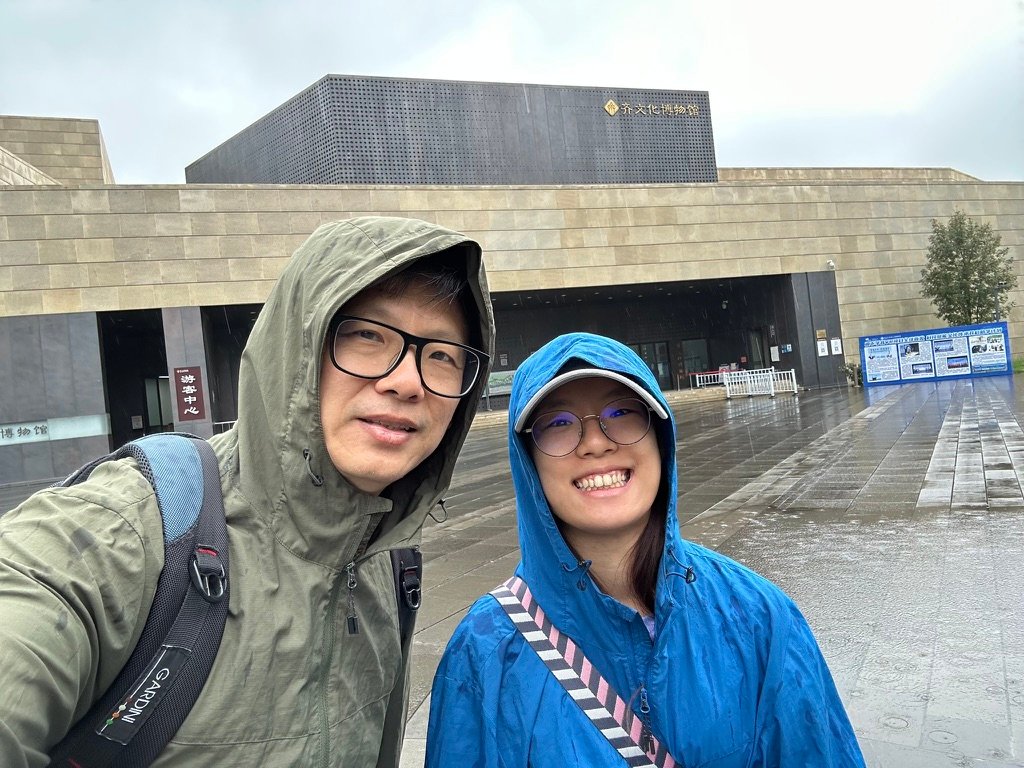
🏛️ First Stop: Qi Culture Museum
For a beginner, Dad would start with:
Qi Culture Museum (齐文化博物馆, Qí Wénhuà Bówùguǎn).
Beginner Chinese:
齐 — Qí
Qi
文化 — wénhuà
culture
博物馆 — bówùguǎn
museum
🔥
This gives you the:
COAT RACK
before you start looking at archaeological sites.
You want to understand:
who Qi was,
where Linzi was,
how the state developed,
what people used,
how they fought,
how they traded
and:
how Qi fitted into the Warring States world.
Then go outside.
🏺 Look for Evidence of a STATE
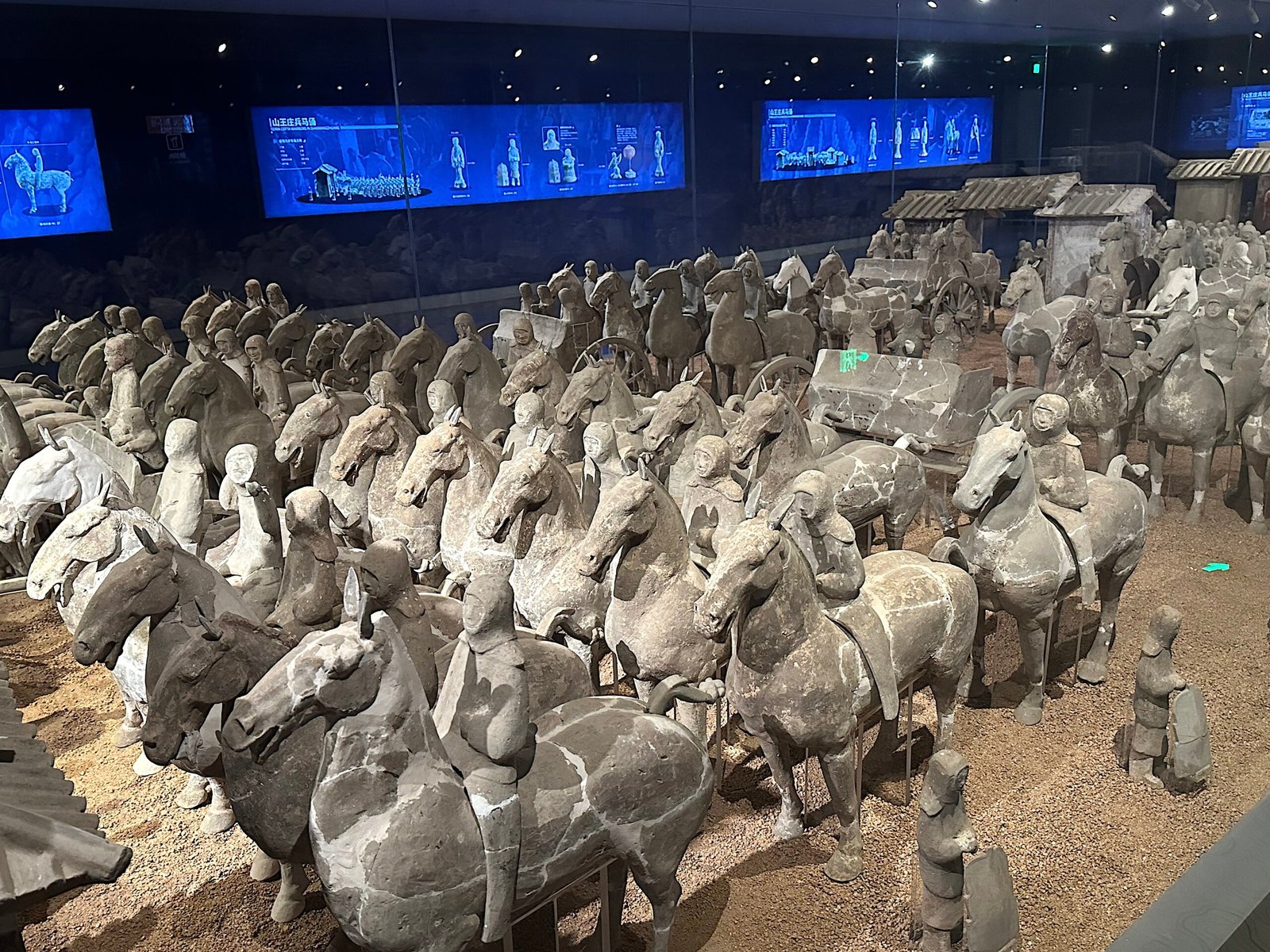
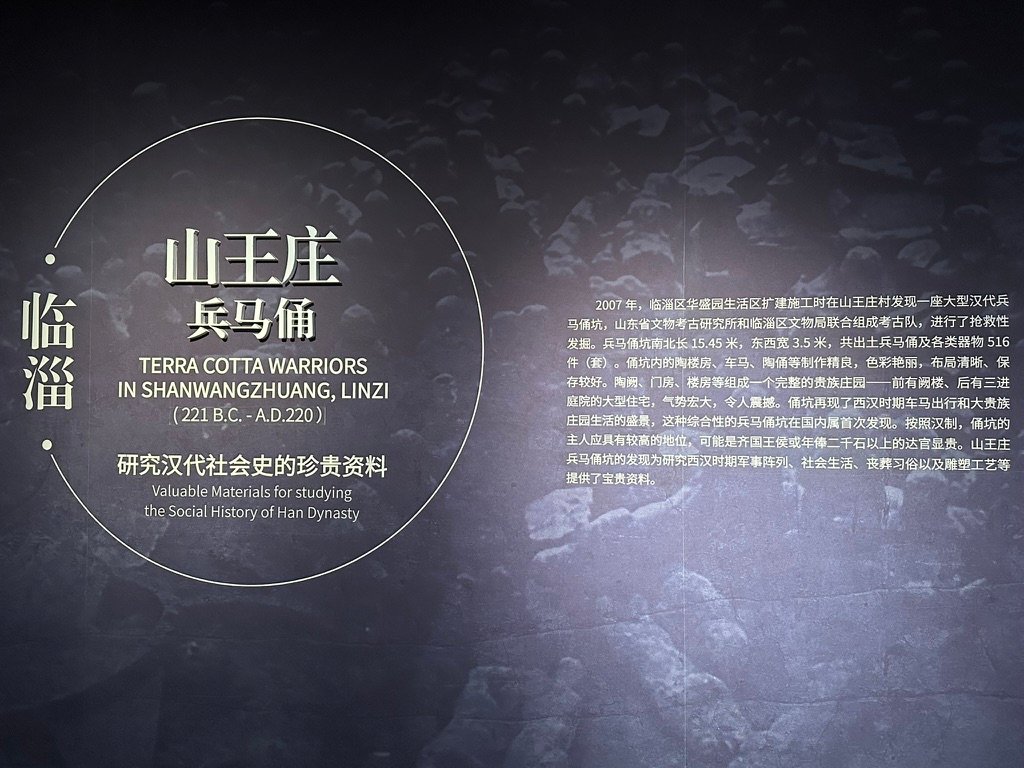
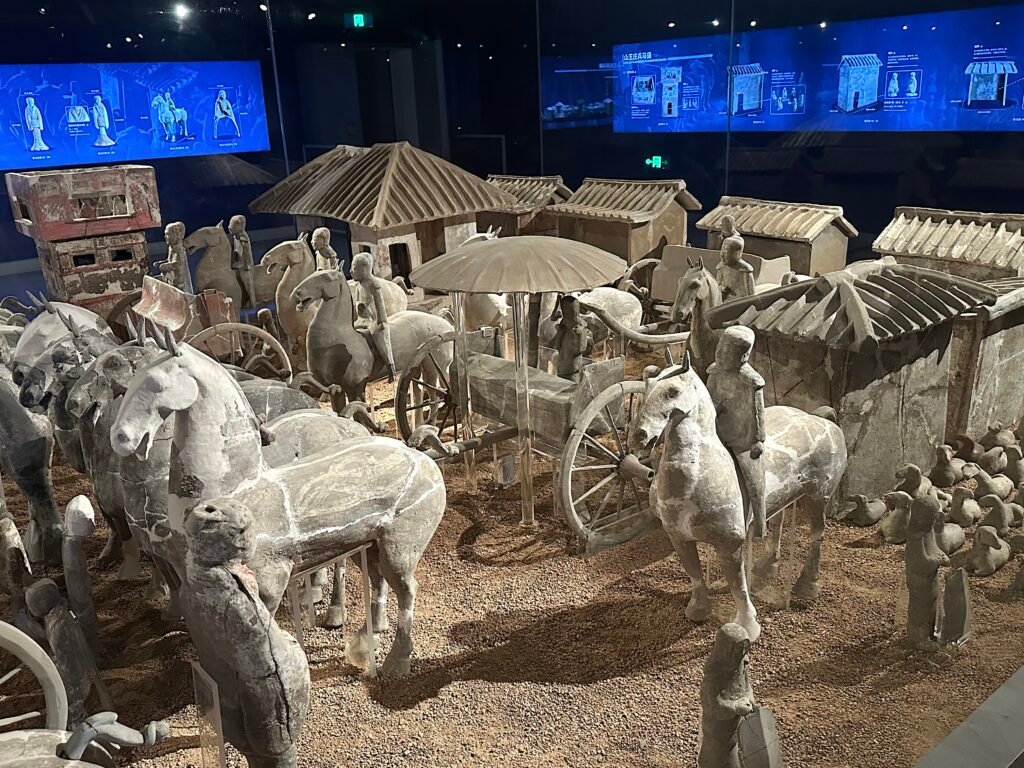
These 陶俑 (táoyǒng), horses and chariots in Linzi remind us that Warring States China was simultaneously an age of extraordinary intellectual debate and brutal political competition. 思想 (sīxiǎng, ideas) mattered — but so did 军队 (jūnduì, armies). Photo by Dad.
This is Dad’s challenge.
Don’t walk through the museum looking only for:
“beautiful ancient objects.”
Look for evidence that:
Qi was a political state.
Ask:
Where is the ruler?
Where is the army?
Where is the administration?
Where is the economy?
Where is the capital?
Where is the money?
🔥
Then something like:
knife money (刀币, dāobì)
becomes much more interesting.
It’s not merely:
funny ancient Chinese money shaped like a knife.
It helps you see a world before:
Qin standardization.
🐇
🏫 Then Follow the Thinkers to Jixia
The next essential name is:
Jixia Academy (稷下学宫, Jìxià Xuégōng).
This is where the intellectual story from Section 2 becomes:
a place.
🔥
Remember:
百家争鸣 — bǎijiā zhēngmíng
Hundred Schools contending
and:
人才 — réncái
talented people / talent.
Don’t simply ask:
“Where were the classrooms?”
😂
Ask:
Why would the rulers of Qi want thinkers gathering in their capital?
Now:
philosophy
meets:
political competition.
🐎 And Look for Qi’s Military World
Qi wasn’t an intellectual discussion club.
😂
It was:
a major Warring States power.
So look for evidence relating to:
warfare (战争, zhànzhēng),
weapons (兵器, bīngqì),
horses (马, mǎ),
chariots (战车, zhànchē)
and:
military organization.
🔥
Because eventually:
ideas
and:
armies
belong to the same political story.
States were competing to:
survive.
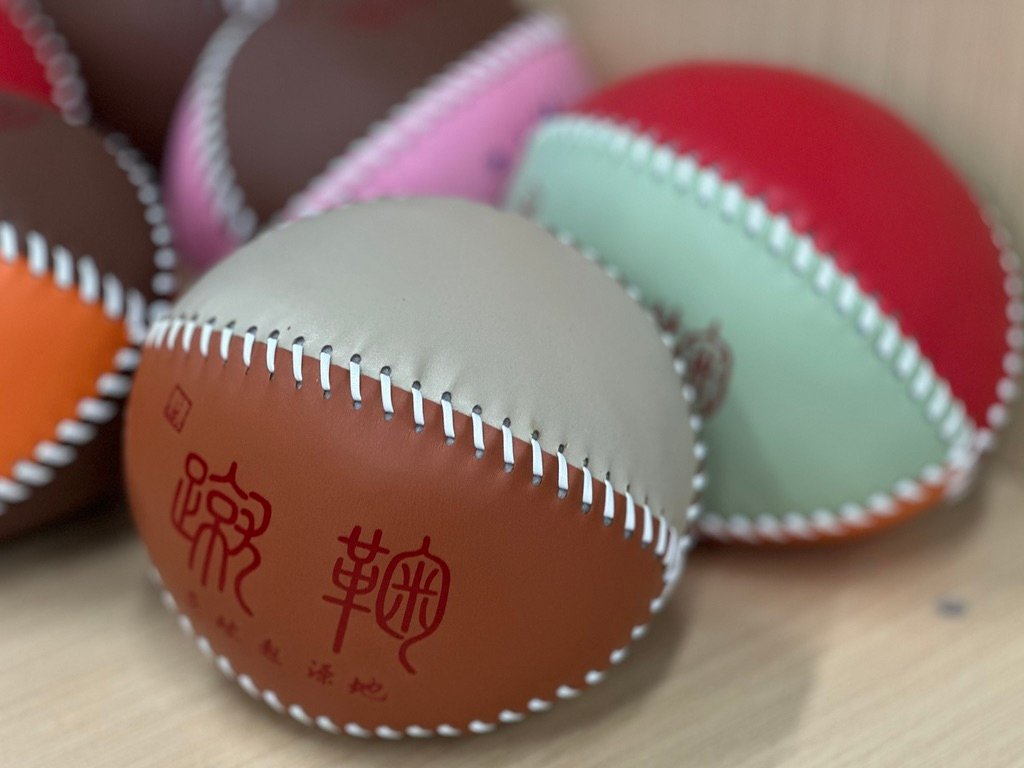
⚽ Yes, You Can Follow the Cuju 蹴鞠 Rabbit Too
Linzi has another famous cultural association:
蹴鞠 — cùjū
ancient ball game
蹴 — cù
kick
鞠 — jū
ball in this historical expression.
😂
If football interests you:
follow that rabbit.
But don’t let it eat the entire Qi article.
Our main dish remains:
pre-Qin political China.
Eight Chinese Words Worth Bringing to Linzi
HSK beginners, this is a good plate.
国 — guó
state / country
齐国 — Qí Guó
State of Qi
都 — dū
capital
战国 — Zhànguó
Warring States
学 — xué
study / learning
人才 — réncái
talented people / talent
变法 — biànfǎ
institutional / legal reform
统一 — tǒngyī
unify / unification
🔥
That final word is the one to carry with you when you leave.
统一.
Because Qin is waiting.
📸 Dad’s Four-Photo Challenge
Don’t come home with only:
museum display cases.
😂
Take four different stories.
1. THE STATE
Something representing:
齐国.
Map.
Capital.
Ruler.
Political territory.
2. THE IDEAS
Something connected with:
稷下学宫
or:
百家争鸣.
3. THE ECONOMY / POWER
Currency.
Weapons.
Administrative object.
Something showing:
how a state worked.
4. THE PLACE
Ancient Linzi itself.
Something that reminds you:
THIS WAS A CAPITAL.
🔥
Then your photographs tell:
STATE → IDEAS → POWER → PLACE.
🐇 Wait… Qin Just Sent Us Back to Mount Tai
We thought the Linzi rabbit was taking us toward:
Qin (秦).
It was.
But then Dad spotted this museum panel:
始皇东巡 — Shǐhuáng Dōngxún
The First Emperor’s Eastern Tours
😳
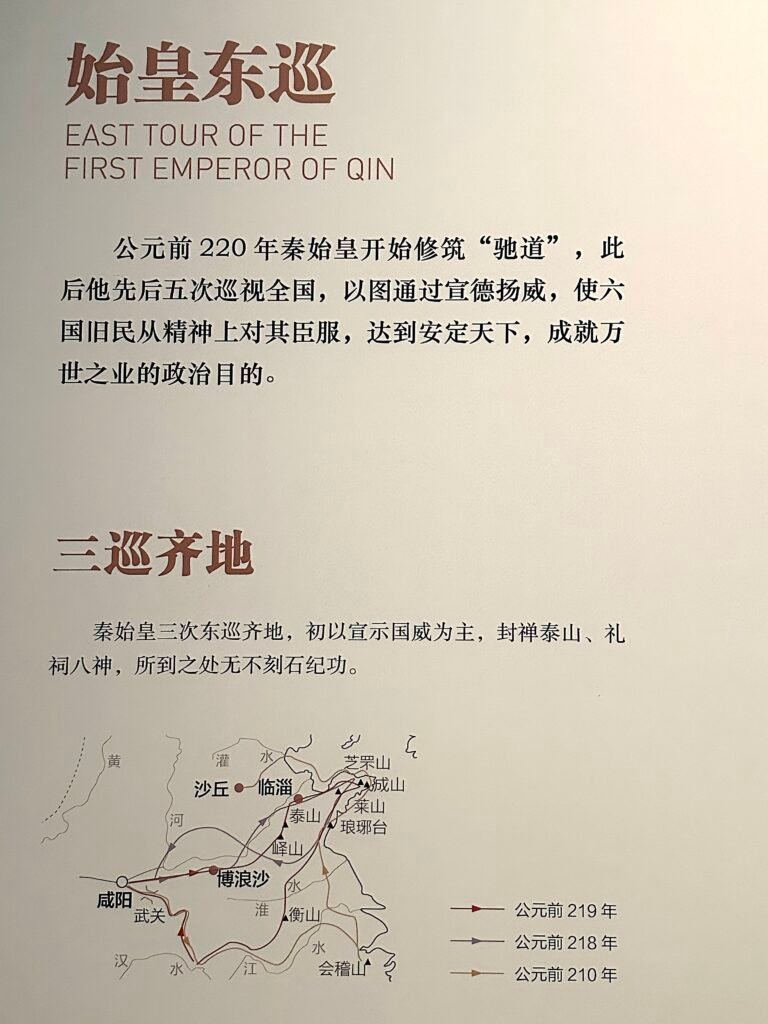
And suddenly Linzi sent us back to Mount Tai. 🐇 Dad photographed this map of 始皇东巡 (Shǐhuáng Dōngxún, the First Emperor’s Eastern Tours) at the Qi Culture Museum. After conquering the rival states, Qin Shi Huang repeatedly traveled through the eastern territories of his new empire—including the former world of Qi—and his journeys took him to Mount Tai (泰山). Linzi shows us what Qin conquered; Taishan helps us ask how the First Emperor projected and legitimized his new imperial authority. Photo by Dad.

🪜 Western Handrail: Think Like a Group CEO
Qin conquered the State of Qi (齐国, Qí Guó) in:
221 BCE.
Acquisition completed.
😂
If we borrow a modern corporate analogy for a moment:
Qi had just become the last wholly-owned subsidiary of the Qin Group.
But apparently Group CEO:
Qin Shi Huang (秦始皇, Qín Shǐhuáng)
wasn’t content to sit at headquarters and read reports.
He went east himself.
Again.
And again.
🔥
The display at the Qi Culture Museum calls this:
三巡齐地 — sān xún Qí dì
Three inspection tours of the former lands of Qi
It records eastern tours through Qi territory in:
219 BCE
218 BCE
and:
210 BCE.
😳
Think about that.
Qin had already:
CONQUERED Qi.
But conquering a state and successfully incorporating its territory and people into a new imperial order are not quite the same thing.
Or, in Dad’s corporate language:
Acquiring the subsidiary is one thing. Integrating it into the Group is another.
😂🔥
Qin Shi Huang’s eastern tours helped project the authority of the new imperial regime across territories that, only a few years earlier, had belonged to independent rival states.
And then Dad looked at the museum map.
🐇
One of the places connected with those eastern journeys was:
Mount Tai (泰山, Tàishān).
Wait…
WE’VE BEEN THERE.
🐇 Linzi Just Sent Us Back to Taishan
At:
Linzi (临淄),
we encounter the world Qin:
CONQUERED.
At:
Mount Tai,
we encounter another question:
How did the new emperor PROJECT and LEGITIMIZE his authority?
On his first eastern tour in:
219 BCE,
Qin Shi Huang went to Mount Tai and performed the famous:
封禅 — fēngshàn
rites associated with imperial authority and the sacred mountain.
🔥
So our rabbit now runs:
齐国 — State of Qi
↓
221 BCE — Qin conquest
↓
秦始皇 — Qin Shi Huang
↓
东巡 — eastern tours
↓
泰山 — Mount Tai
↓
封禅 — fengshan rites
↓
LEGITIMACY
🐇🔥
And suddenly the Taishan article we read earlier means something different.
The man who had defeated all the rival states still had another problem:
How do you turn military conquest into legitimate imperial rule?
That’s why Deep China keeps connecting places.
Linzi shows us what Qin conquered.
Taishan helps us ask what Qin Shi Huang did after he won.
🐇 Follow this rabbit:
Deep China: Mount Tai 泰山 — Beyond Beijing: Climb Mount Tai 泰山 — and Discover Why Chinese Emperors Came Here to Meet Heaven
And when you’re ready to go Michelin Courses:
⭐ What Did Qin Shi Huang Actually “Unify”?
⭐ Why Does Chinese History Keep Talking About Heaven?
🐞🔥
After Qin conquered the rival states and created the first imperial order in:
221 BCE,
Qin Shi Huang didn’t simply stay in his capital.
He traveled.
The museum display traces several of his:
东巡 — dōngxún
eastern inspection tours
through the newly conquered eastern territories.
And look where the rabbit goes:
QIN 秦
↓
QI 齐
↓
LINZI 临淄
↓
EASTERN TOURS 东巡
↓
MOUNT TAI 泰山
🐇🔥
Wait.
We’ve been there too.
⛰️ Linzi Just Changed Our Taishan Story
Earlier in our Shandong journey, we climbed:
Mount Tai (泰山, Tàishān).
There we asked:
Why did Chinese emperors need Heaven?
Now Linzi adds another layer.
Qin Shi Huang had just conquered states that had possessed their own:
rulers,
capitals,
armies,
institutions
and:
political identities.
Military conquest could create:
POWER.
But how does a new emperor communicate:
LEGITIMACY
over this enormous new political order?
🔥
That helps us understand why Qin Shi Huang’s eastern tours—and his association with Mount Tai and the 封禅 (fēngshàn) rites—matter.
The emperor wasn’t merely:
sightseeing.
😂
Imperial travel could itself become:
POLITICS.
🧭 Two Places. One Bigger Question.
At:
LINZI 临淄
we see what Qin:
CONQUERED.
At:
MOUNT TAI 泰山
we begin asking how the new emperor:
LEGITIMIZED HIS RULE.
😳
So suddenly two separate Shandong dishes belong on the same plate:
齐国 → 秦统一 → 始皇东巡 → 泰山 → 封禅
And that’s exactly how the Deep China rabbit works.
One place gives you the question.
Another place helps answer it.
🐇🔥

🐞 Now You’re Ready for the Sting
Before leaving Linzi, Dad wants you to remember:
three questions.
🐇 QUESTION 1 — What Did “China” Look Like Before Qin?
You now know:
齐国
was not merely:
“a province of China.”
It had:
a ruler,
capital,
army,
economy
and:
political interests.
So what exactly was the larger world these states shared?
🔥
That takes us directly to:
What Did Qin Shi Huang Actually “Unify”?
🐇 QUESTION 2 — Why Were So Many Thinkers Arguing About Government?
Confucius.
Mencius.
Xunzi.
Mohists.
Legalist thinkers.
Daoist thinkers.
Why did this period produce such intense intellectual competition?
Because:
STATES WERE COMPETING TOO.
🔥
Different rulers wanted:
solutions.
That’s why:
百家争鸣
belongs inside:
political history
not merely:
philosophy class.
🐇 QUESTION 3 — Did Qin Destroy Everything That Came Before It?
Qin conquers:
Qi
in:
221 BCE.
The independent state disappears.
But do:
ideas,
institutions,
people,
administrative experience
and:
cultural traditions
simply disappear too?
😬
No historical transition is that clean.
And that leads to our next Michelin rabbit:
Qin Lasted Only 15 Years — So Why Did It Change China for More Than 2,000 Years?
🐇🔥
🍽️ Ready to Go Michelin?
Linzi is perhaps the PERFECT doorway into:
What Did Qin Shi Huang Actually “Unify”?
Because now you’ve physically encountered:
one of the things Qin unified.
😳
Not an abstract:
“Warring State.”
But:
QI.
A real political world.
A capital.
A government.
An economy.
An intellectual center.
Then:
Qin conquered it.
🔥
Now the word:
统一 — unification
means much more.
🐇 Continue the Shandong Journey
And notice what our Shandong coat rack is doing.
TAISHAN 泰山
asks:
Why does political power need Heaven?
↓
QUFU 曲阜
asks:
How do ideas become institutions?
↓
LINZI 临淄
asks:
What happens when different states and different ideas compete?
🔥
And next:
DEZHOU 德州
will ask something completely different:
Once China becomes an empire, how does it connect itself internally — and how does it deal with the world outside?
😬
Grand Canal.
Ming China.
Sulu.
Diplomacy.
Zheng He.
🐇🌏
The rabbit is getting dangerously close to escaping China again.
😂
🐞 ChinaTravelBUG’s Take
Go to:
Zibo
for more than barbecue.
😂
Go to:
Linzi
and try to imagine:
China before imperial China.
Stand in the former capital of:
Qi.
Learn:
国.
Look at:
刀币.
Follow:
稷下学宫.
Listen to the arguments of:
百家争鸣.
Then remember:
Qin was only ONE of the competing states.
Until:
221 BCE.
🔥
After Linzi, the sentence:
“Qin Shi Huang unified China.”
should bother you slightly.
Good.
🐞
Because now you know enough to ask:
“What exactly did he unify?”
And THAT is where sightseeing becomes:
understanding Chinese history.
🐇🔥
Travel China. Let the places teach you Chinese history.
See the place. Ask the bigger question. Understand China better.